

Contents
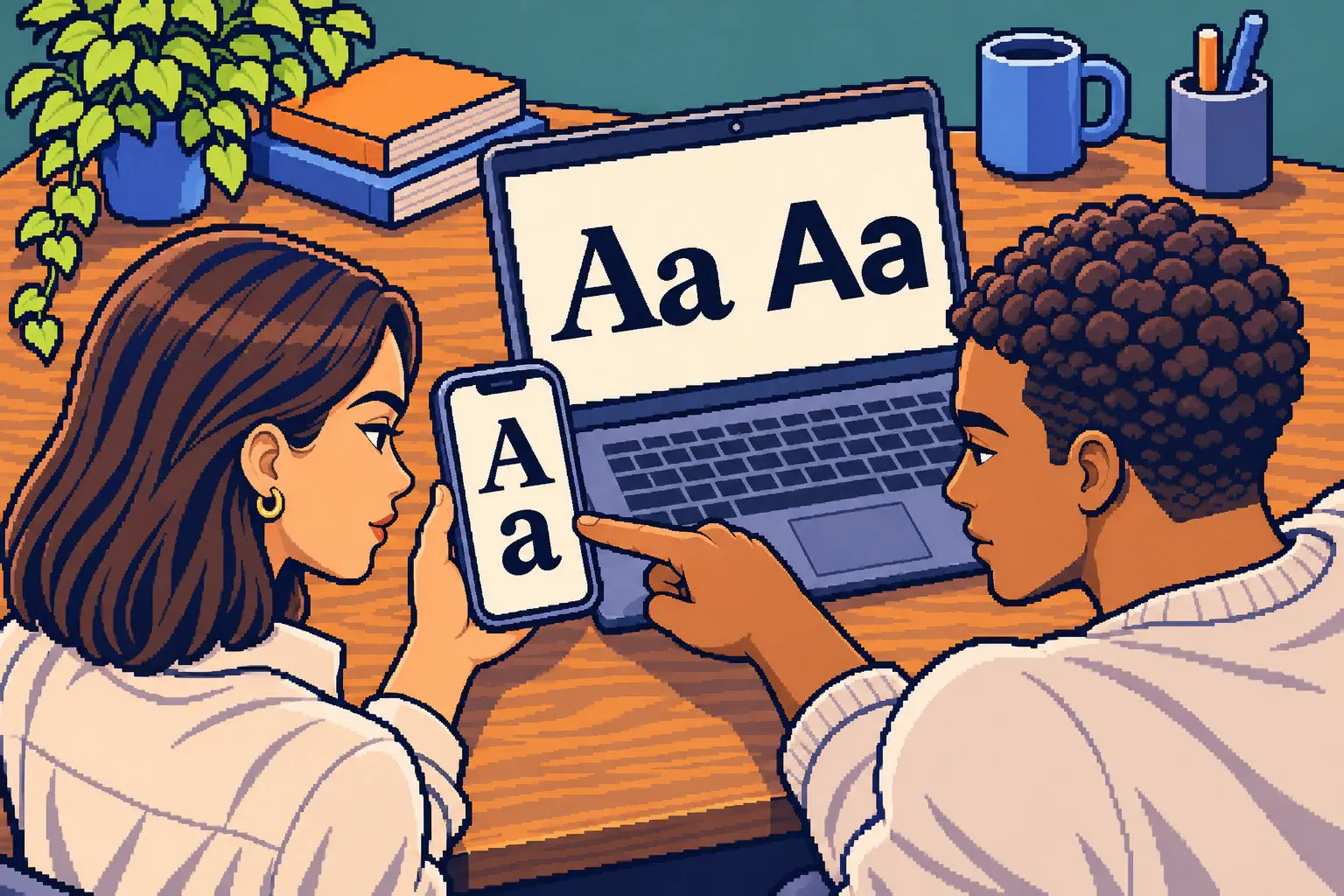
The product name fits on one line on the website. In the first mobile build, the last word wraps. Celina asks Tim to use the website typeface. He can make the order screen match, even when the phone is offline. There’s one question before he adds the file: can the company send a copy to everyone who installs the app?
You can ship the same typeface if your licence covers distributing the font file with the app. Take Adobe Fonts. Its standard web service lets a browser load a typeface through Adobe’s embed code. That subscription alone does not cover bundling the file with an iOS or Android app. Other licences can grant that right, including for paid apps. Adobe Fonts service terms, sections 3.1 and 3.4.
Find out where the letters come from
Celina opens the website on her phone. The type looks fine there. Tim shows her the difference: the site fetches the font from Adobe’s servers. In the app, a customer needs to be able to pull up a saved order with no connection. Tim wants the file on the phone so it can draw whatever order name the customer opens.
Ask whoever builds the release: “When I install the app, does the font file come with it?” Some apps display a website inside a built-in browser, often called a web view. Adobe supports loading its hosted web fonts there through its embed code. Shipping the file inside the installer is a different use. For that, check the licence for the specific font and how your team obtained it. Adobe’s guidance on web views and app embedding.
Give the supplier enough detail to quote
Celina finds the family name and the two weights used on the order screen, regular and bold. That gives her a much better question for the type designer or distributor:
Our company publishes a paid app for iOS and Android. We want to bundle these two font files so customers can read orders offline. Does our current licence cover that? If we need an app licence, what would it cost, and would it cover future updates?
Name the company that will publish the app. If the quote has an installation cap or an expiry date, ask what happens to existing installations and future releases when you reach it. Keep the terms that go with the quote. If an agency sourced the font and your team is taking over the release, the agency agreement, file source and licence are the starting points for a product IP review. A signed-off design tells you which typeface the client liked. You still need to know who can distribute the file.
Keep a release option open
While Celina waits for a price, Tim tries the screen in Source Sans 3. Adobe also distributes this family from its own public repository under the SIL Open Font License (OFL). Those terms allow the original files to be bundled with a paid app. Tim can put the copyright notice and full licence from the release in an offline licences screen that ships with the app. He only needs to package the weights the design uses. Source Sans 3 licence and OFL guidance for mobile apps, question 1.20.
Celina tests the longest order name on the smallest supported phone, including the accented letters in the Polish version. If the alternative works, they can ship while the original quote is still in someone’s inbox. Tim records the source and version alongside the font files so the next release engineer can trace the file. That record also answers one of the questions that comes up during an investor’s review of the product IP.
Licence terms checked on 23 November 2026.